
RS ZERO
Front Cab Design & Modeling | Interior Design | Exterior Livery
The Stadler RS ZERO represents the next generation of regional rail. As the successor to the successful Regio-Shuttle RS1, it combines the proven vehicle concept of its predecessor with battery-electric and hydrogen-powered drivetrains.
From the very beginning of the project, we defined the key design requirements and developed the overall design direction for the front cab and carbody. This was complemented by a modular interior concept and a comprehensive CMF strategy, with a particular focus on sustainable materials.
The prototype, presented at InnoTrans in 2024, received both the Focus Open Design Award and the Brandenburg Design Award.


Design Definition
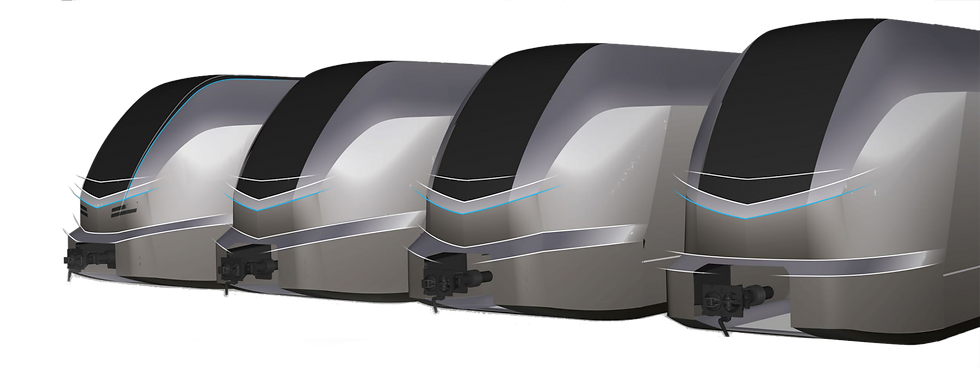
The exterior development also included adapting the front cab geometry to the two-car body configuration. This was based on our modular front-end design platform, originally developed in-house in 2016 and continuously refined ever since. The concept has since been applied across more than 15 vehicle projects.



Development Process
At the beginning of the project, a range of design directions were explored, evaluated and gradually refined into a clear overall concept. Through several rounds of iteration, these ideas evolved into the final vehicle design. Sketches, CAD models, VR presentations and visualisations supported the process throughout, allowing the design to be continuously reviewed, tested and refined.


Interior Concept
The interior was designed with one main goal in mind: maximum flexibility. To achieve this, we developed a modular system based on rails integrated into the side walls, allowing a wide range of interior elements to be installed and repositioned as needed.
This makes it easy to adapt the space to different requirements, whether for seasonal use, special events or changing passenger needs. The prototype demonstrates the versatility of the concept through a range of scenarios, including a train office, a lounge, a dedicated bicycle area and new seating concepts.


